 Skip to content
Best Business Accounts for Sole Traders
Explore and compare the best business bank accounts for sole traders — including features, fees, and everything you need to know about Making Tax Digital (MTD).
-
ANNA Money
 Monthly Fee£0Bank TransfersUnlimited outgoing free · £1,000 incoming free, then 0.95%ATM withdrawalsFreeFX Fees1%FSCS ProtectionNo
-
AccountGrowMonthly Fee£12.90 + VATBank Transfers15 free/mo, then 27pATM withdrawals1.5% (min £1)FX Fees1% · SWIFT £5Accounting SoftwareXero, Integration with third party accounting software
-
AccountBusinessMonthly Fee£22.90 + VATBank Transfers60 free/mo, then 20pATM withdrawals3 free/mo, then 1% (min £1)FX Fees1% · 2 free SWIFT/moAccounting SoftwareXero, Integration with third party accounting software
-
AccountBig BusinessMonthly Fee£59.90 + VATBank TransfersUnlimited freeATM withdrawalsFree unlimitedFX Fees0.5% · 4 free SWIFT/moAccounting SoftwareXero, Integration with third party accounting software
ANNA Money is a business account for startups, freelancers, creatives, and growing businesses. It offers instant invoicing, automatic reconciliation, and smart money management tools. You get a debit card, virtual cards, and up to 40% cashback on 150+ products. Includes international payments with a dedicated IBAN, pots, unlimited expense cards, and cash deposits at 28,000+ locations.
Accounting Integrations: Share access with your accountant or sync with accounting software like Xero, QuickBooks, FreshBooks, Sage 50 and FreeAgent.
Multicurrency Support: Thanks to Railsr and Currencycloud, ANNA lets you send and receive international payments via SWIFT and SEPA. You can set up a multicurrency IBAN, hold funds in USD, EUR, or CHF, and benefit from low-cost SEPA transfers across Europe. Currency conversion fees are up to 1% per transfer.
International Payments (FX Fees):
- Pay As You Go: SWIFT payments: £5 each, Currency conversion fee: 1%
- Grow: SWIFT payments: £5 each, Currency conversion fee: 1%
- Business: 2 free SWIFT payments/month, then £5 each, Currency conversion fee: 1%
- Big Business: 4 free SWIFT payments/month, then £5 each, Currency conversion fee: 0.5%
Eligible business types: Sole Traders, Limited Companies and LLP
Find out more at Anna.Money
-
-
CountingUpMonthly Fee£5Bank Transfers3 free/mo, then 27pATM withdrawals£1FX Fees3%FSCS ProtectionYes
-
Account2nd TierMonthly Fee£12Bank Transfers3 free/mo, then 27pATM withdrawals£1FX Fees3%Accounting SoftwareBuilt-in Accounting
-
Account3rd TierMonthly Fee£20Bank Transfers3 free/mo, then 27pATM withdrawals£1FX Fees3%Accounting SoftwareBuilt-in Accounting
CountingUp combines a business account with built-in accounting and a free 3-month trial. Create invoices, accept card payments, and track late payments automatically. SmartTax AI categorises transactions, estimates tax, and flags tax allowances to save you money. File VAT to HMRC, store receipts, and connect your accountant directly.
1st Tier (5£/monthly) : Total monthly Deposit in £0-£750
2nd Tier (12£/monthly): Total monthly Deposit in £750-£7,500
3rd Tier (20£/monthly): Total monthly Deposit in £7,500+Cash deposits:
- Post Office Cash Load: 0.5% (minimum £2)
- Cash Load (PriceSpecification): 3%
Accounting Integrations: Users can connect their accountant directly to their account via the Countingup Accountant Hub, allowing the accountant to access their data.
Multicurrency Support: Countingup accounts don’t currently have an IBAN, so international bank transfers cannot be sent or received directly from the account. However, with the Countingup Member Offer via CurrencyFair, users get 15% off exchange margins, with rates up to 8× cheaper than banks. You can exchange over 20 currencies to 150 countries. Foreign currency card transactions incur a 3% fee per transaction.
Eligible business types: Sole Traders and Limited Companies.
Find out more at CountingUp
-

Not sure which account is right for you? Read our guide below to understand what to look for
Do Sole Traders Need a Business Bank Account?
There is no legal requirement for sole traders to open a separate business bank account — unlike limited companies, which must have one. As a sole trader, you are technically permitted to use your personal account for business transactions. But that does not mean you should.
More practically, mixing personal and business finances creates real problems when it comes to filing your Self Assessment tax return. Separating the two from day one keeps your records clean, makes expense tracking straightforward, and gives you a clearer picture of how your business is actually performing.
Check Your Personal Account Terms
Many personal bank accounts explicitly prohibit business use in their terms and conditions. Using your personal account for business could breach your banking agreement — so it is worth checking the small print with your bank if you are unsure.
Why a Dedicated Business Account Makes Sense
- Keeps personal and business finances clearly separated — essential for accurate Self Assessment filing
- Simplifies tracking income, expenses, and cash flow throughout the year
- Looks more professional to clients — payments arrive in your business name
- Demonstrates income cleanly if you apply for a mortgage or business loan
- Many modern accounts include built-in invoicing, receipt capture, and accounting integrations
- As MTD for Income Tax rolls out from April 2026, a dedicated account makes digital record-keeping significantly easier
What to Look for in a Business Account
Not all business accounts are built the same. When comparing options as a sole trader, the key factors to consider are:
- Monthly fees and transaction costs — some accounts are free at entry level but charge per transaction; others charge a flat monthly fee for unlimited use.
- FSCS deposit protection — the Financial Services Compensation Scheme protects eligible deposits up to £85,000 per authorised institution. Not all fintech providers are covered. Some operate as e-money institutions, which carry different protections. Always check before depositing significant funds.
- Accounting software integrations — a direct connection to tools like QuickBooks, Xero, or FreeAgent saves time and reduces errors.
- MTD compatibility — from April 2026, sole traders with income over £50,000 must keep digital records and submit quarterly updates to HMRC. A business account that feeds directly into MTD-compatible software removes a significant admin burden.
- Mobile app quality — most sole traders manage their finances on the go; a well-designed app matters.
- Cash deposit options — if your business takes cash, check whether the account supports deposits via Post Office or PayPoint branches.
- Customer support — the level and availability of support varies significantly between providers.
Sole Traders and Making Tax Digital: What You Need to Know
If you are self-employed in the UK, there is a significant change coming to the way you manage and report your tax. Making Tax Digital (MTD) for Income Tax is being phased in from April 2026 — and for many sole traders, the time to prepare is now. This section explains what MTD means for you, what it involves in practice, and which tools can help you stay compliant without adding hours of admin to your week.
Making Tax Digital for Income Tax Self Assessment (MTD for ITSA) is a government initiative that changes how sole traders and landlords report income to HMRC. Instead of filing one annual Self Assessment tax return, you will be required to keep digital records throughout the year and submit quarterly updates to HMRC using compatible software. The annual tax return does not disappear entirely — you still submit a final year-end declaration and pay any tax owed by 31 January. But the way you record and report your finances changes significantly.
Important: MTD for VAT Is Already in Force
If your VAT-taxable turnover exceeds £90,000, you are already required to use MTD-compatible software for your VAT returns. MTD for Income Tax is the next stage of the same initiative, extending digital reporting to self-employment income. Source: makingtaxdigital.campaign.gov.uk
Who Does MTD Affect, and When?
MTD for Income Tax is being rolled out in phases based on your annual qualifying income — that is, your total gross income from self-employment and/or UK property, before deducting any expenses. Your qualifying income is based on the previous tax year’s figures. HMRC checks once a year and will notify you when you need to join. If your income drops below the threshold in a future year, you may be able to leave the scheme — but you must stay compliant in the meantime.
| Start Date | Who Must Comply |
|---|---|
| 6 April 2026 | Income over £50,000 in the 2024/25 tax year |
| 6 April 2027 | Income over £30,000 in the 2025/26 tax year |
| 6 April 2028 | Income over £20,000 in the 2026/27 tax year |
Source: makingtaxdigital.campaign.gov.uk
Are You Already Affected?
If your total income from self-employment and/or property was over £50,000 in the 2024/25 tax year, you must start using MTD from 6 April 2026. If you are close to that threshold, it is worth checking now rather than discovering you are in scope at short notice.
What Changes in Practice?
- Keep digital records: all your self-employment income and expenses must be recorded digitally using MTD-compatible software. You cannot use paper records or manually entered spreadsheets — though bridging software can connect existing spreadsheets to an MTD-compliant submission tool, provided the data links are digital and automatic.
- Submit quarterly updates: four times a year, you must submit a summary of your income and expenses to HMRC. These are not full tax returns — they are cumulative summaries that give HMRC a real-time picture of your finances. You can also correct earlier submissions in later quarters.
- Submit a final declaration: at the end of the tax year, you complete a final declaration — similar to the current Self Assessment return — where you include all other income sources (savings, dividends, pensions) and claim any relevant reliefs. Tax is still paid by 31 January.
The MTD Quarterly Submission Deadlines
Each quarterly update is due on the 7th of the month following the end of that quarter. Missing a deadline results in a penalty point. Accumulate four points and you receive a £200 fine. Points only expire after a period of compliant filing.
| Quarter Period | Submission Deadline |
|---|---|
| 6 April – 5 July | 7 August |
| 6 July – 5 October | 7 November |
| 6 October – 5 January | 7 February |
| 6 January – 5 April | 7 May |
What Are the Benefits for Sole Traders?
While MTD means more frequent reporting, it also brings practical advantages:
- Better cash flow planning — quarterly updates give you an ongoing estimate of your tax liability, so there are no year-end surprises.
- Reduced errors — software automates calculations, reducing the risk of costly mistakes.
- More financial visibility — MTD-compatible tools typically include real-time profit and loss reports, helping you make better business decisions.
- Less last-minute stress — keeping records up to date throughout the year is far less daunting than reconstructing a year of finances in January.
The Best Tools for MTD Compliance
HMRC does not provide MTD software itself — you need to use a compatible commercial product. The right tool for you depends on how much involvement you want in the process. Below are two options that work particularly well for sole traders.
ANNA Money
Best for: Sole traders who want a business account and MTD handled in one place, automatically
Price: From £0/month — VAT filing included in +Taxes plans; first month free on any paid plan. No hidden fees.
Protection: Not FSCS-protected (e-money institution). FCA registered.
ANNA Money is a business bank account built specifically for sole traders — but it goes well beyond banking. Its built-in Auto Accountant is an AI-based, HMRC-compliant tool trusted by thousands of UK businesses and designed specifically for the UK tax system. Auto Accountant files your MTD for you, first time and error-free. Digital records are created automatically from your bank activity, and quarterly updates are prepared and ready for filing — with no manual data entry, no missed deadlines, and no human error. Importantly, you do not need to switch banks to use it: Auto Accountant works with all UK business bank accounts.
- Business bank account with UK sort code and account number
- Auto Accountant: AI-based, HMRC-compliant — trusted by thousands of UK businesses
- Digital records created automatically from bank activity
- Quarterly MTD updates prepared and ready for filing — you review and approve, then tap to file
- VAT handled from start to finish: transactions logged, expenses categorised, VAT filed directly to HMRC
- Supports Standard VAT Scheme and Flat Rate VAT Scheme — calculations handled automatically
- MTD-compliant by design — no spreadsheets, no bridging software needed
- Year-end Self Assessment prepared and filed — free for 2025/26 (limited offer)
- Works with all UK business bank accounts — no need to switch
- Invoicing with card payments, receipt capture, and invoice chasing in one app
- One employee payroll with automated PAYE and NICs
- 24/7 UK-based customer support and tax expert support
ANNA’s MTD Switching Offer
If you have already paid for accounting software for your 2025/26 Self Assessment, ANNA will refund you up to £150 including VAT when you switch to their MTD service. To qualify, you must be registered for MTD and sign up for ANNA’s MTD service. Accountant fees are not included in the refund. Always verify current terms directly with ANNA.
The Accountancy Partnership
Best for: Sole traders who want a dedicated human accountant to manage MTD on their behalf
Price: From £22.50/month (fixed fee — no surprise bills)
Protection: Qualified accountants; HMRC-regulated submission
The Accountancy Partnership provides comprehensive online accountancy services for a transparent, fixed monthly fee. If you would prefer a qualified accountant to manage your MTD obligations entirely — from quarterly updates to your year-end declaration — this service removes the need to interact with software at all. A dedicated accountant is assigned to your business, available via phone, email, and live chat.
- Dedicated accountant assigned to your business
- Quarterly MTD updates and final year-end declaration managed on your behalf
- Financial statements and tax return preparation and submission
- Unlimited support via phone, email, and live chat
- User-friendly accounting software included
- Automatic deadline notifications so you never miss a filing date
- Annual tax efficiency reviews to minimise your liability
- HMRC investigation representation if required
- Mobile app for invoicing and mileage tracking
Which Option Is Right for You?
If you are comfortable managing your own finances and want a low-cost, automated solution, ANNA Money’s Auto Accountant handles MTD with very little input from you. If you would rather hand everything to a qualified professional — especially if your finances are more complex — The Accountancy Partnership provides a full-service alternative at a predictable monthly cost.
Articles and Guides for Sole Traders & Self-Employment





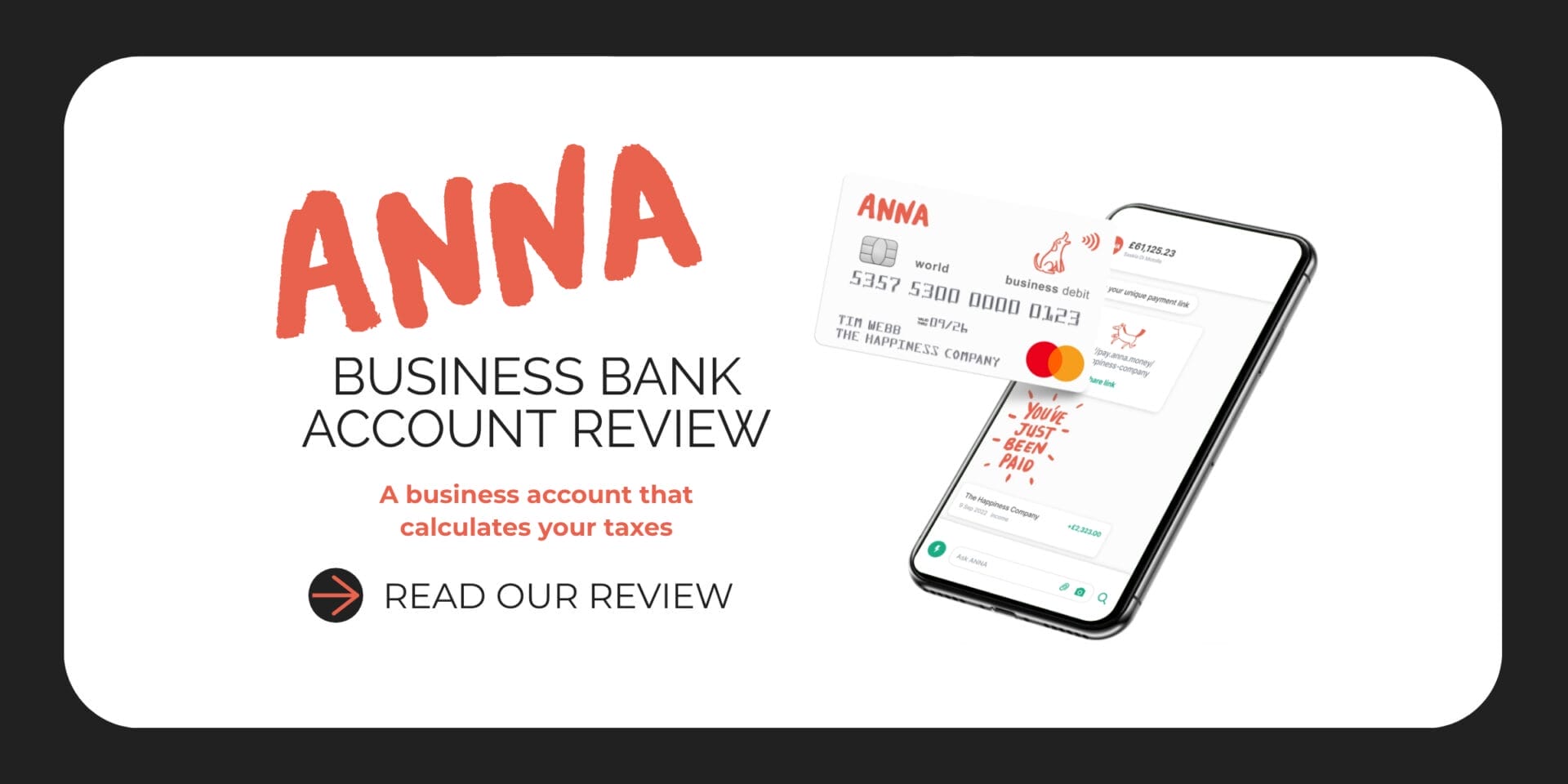

✓ VAT & Self Assessment – Calculates and files both directly to HMRC.
✓ Works with any UK bank – No need to switch your existing account.