 Skip to content
Best Multi-Currency Accounts for Businesses
Explore and compare the best multi-currency business accounts — find the right fit for your international payment needs, whether you’re a startup, freelancer, limited company, or growing business trading across borders.
-
Airwallex
 Monthly Fee£0*Bank TransfersFreeATM withdrawals–FX Fees0.5% – 1%FSCS ProtectionNo
-
AccountGrowMonthly Fee£49Bank TransfersFreeATM withdrawals–FX Fees0.5% – 1%Accounting SoftwareXero
-
AccountAccelerateMonthly Fee£999Bank TransfersFreeATM withdrawals–FX Fees0.5% – 1%Accounting SoftwareXero
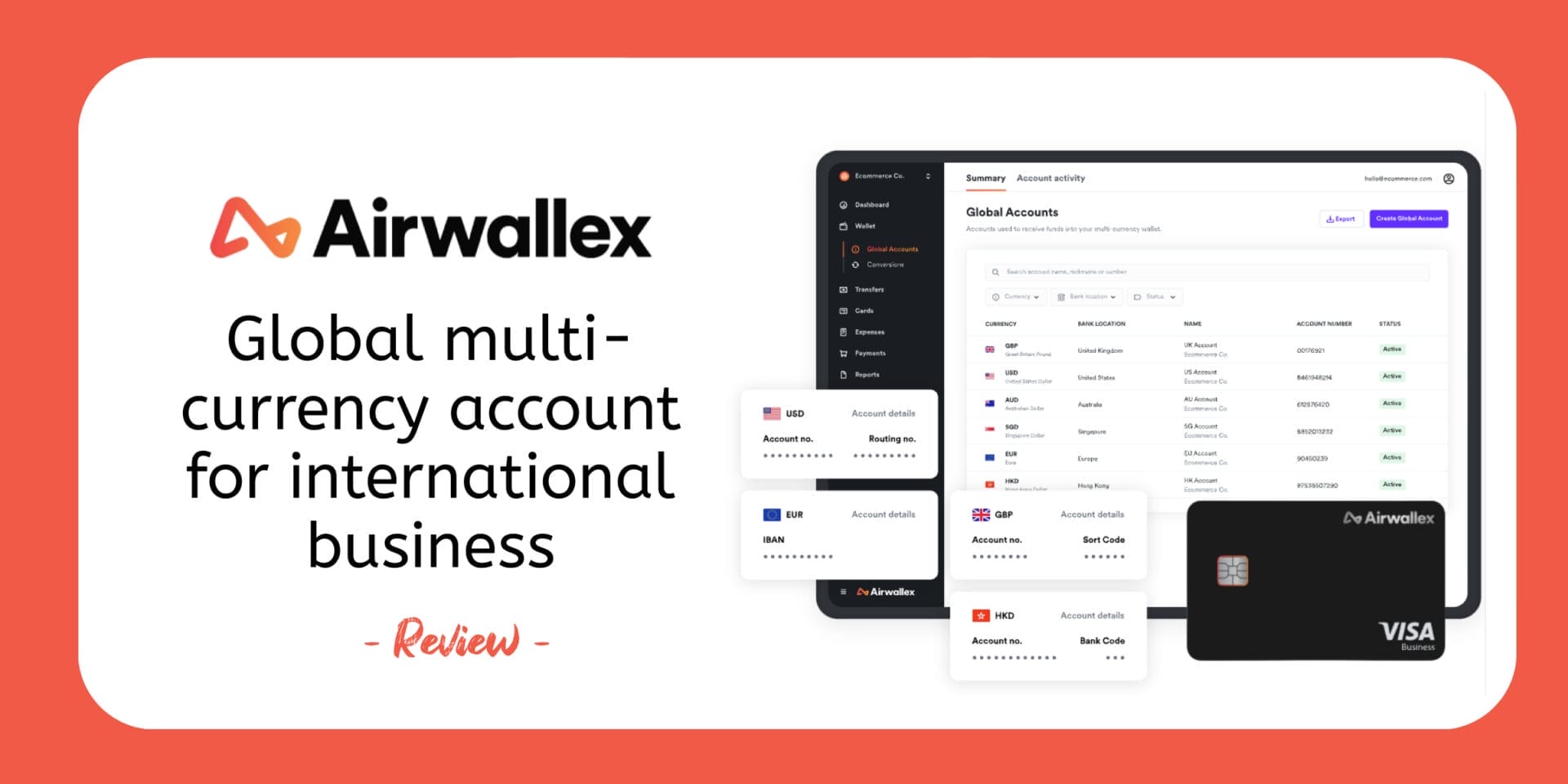
Airwallex is a financial services company and offers a global multi-currency account with local details to receive payments worldwide. Make fast, low-cost international transfers and access flexible corporate cards for global spending. Connect easily with major software tools and manage FX at competitive rates. Ideal for businesses operating across borders. Their Explore plan is free if you keep £10k in deposits or balance — otherwise, it costs £19/month.
Accounting Integrations: Sage, Xero, Odoo, NetSuite, Asperato, ApprovalMax
Multicurrency Support: Airwallex offers fast, cost-effective international money transfers, allowing businesses to pay suppliers and employees in 200+ countries and regions across 60+ currencies. Payments can be received in as little as one business day, with the full amount on delivery guaranteed. Users have access to interbank FX rates, ensuring competitive pricing with no hidden fees, and can streamline payments using batch transfers to send funds to multiple recipients in a single transaction.
Eligible business types:Sole Trader, Limited Companies, LLP and LP
Find out more at Airwallex
-
-
WorldFirst International Business Payments — World Card: Earn £100 Back on Your Business Spend | Limited Time Offer
 Monthly Fee£0Bank TransfersLocal £0.30 · International £4.00 Cross-currency £5k+ FreeATM withdrawals–FX FeesUp to 0.50% · New customers 0.3%FSCS ProtectionNo
WorldFirst is a cross-border payments platform founded in London and now part of Ant Group, serving over 1.5 million businesses globally. Open a multi-currency World Account with local banking details in 20+ currencies, receive from 130+ marketplaces for free, and send payments in 100+ currencies to 210+ countries — with 80% arriving the same day. Forward contracts up to 24 months and unrivalled China payments via MYbank integration make it the standout choice for businesses trading internationally. No monthly fees, no minimum balance, no receiving fees.
Bank Transfer Fees: Local (GBP, EUR, USD) £0.30 · International £4.00 · Cross-currency £5k+ Free · World Account transfers Free
FX Rate: Up to 0.50% · New customers from 0.30%
Cashback (World Card): 0.5% under £40k/month · 0.8% up to £80k · 1.2% over £80k
Accounting Integrations: Xero, NetSuite
Eligible business types: Sole Trader & Limited Companies
Find out more at WorldFirst
-
Wise BusinessMonthly Fee£0Bank TransfersFree (UK)ATM withdrawalsFreeFX FeesFrom 0.33%FSCS ProtectionNo
Wise Business is built for companies operating internationally, offering low-cost global payments, local bank details in multiple currencies, and fast transfers. You can invoice clients abroad, pay suppliers efficiently, and manage team spending with full control. The account is designed to simplify international finance while keeping fees transparent.
💼 One-time account opening fee – £50
✅ Domestic bank transfers (UK) – Free
🌍 International transfers – From 0.33% + a small fixed fee
🏧 ATM withdrawals up to £200/month – Free (up to 2 withdrawals)
💳 ATM withdrawals over £200/month – £0.50 + 1.75% per withdrawalMulticurrency Support: Multicurrency is at the core of Wise Business accounts. You can hold and convert over 40 currencies, and receive local account details in 22 currencies (EUR IBAN, US routing number, GBP account number, and more) so you can invoice and get paid like a local. Send fast global payments, automate batch transfers, and benefit from real mid-market exchange rates. The account includes a multi-currency card for international spending and supports team spending controls and interest-earning balances.
Accounting Integrations:
Xero, Quickbook, FreeAgent, Freshbook, Emma, ZohoBooks, Odoo, QuickFile, Ember, CheddarEligible business types: sole traders and freelancers, limited and public companies, partnerships, charities and trusts in the European Economic Area (EEA), Canada, US, Switzerland, Australia, and New Zealand
Find out more at Wise Business
-
MultiPassMonthly FeeFrom £100Bank Transfers£1/OutgoingATM withdrawals1.5%FX Fees1.5%FSCS ProtectionNo
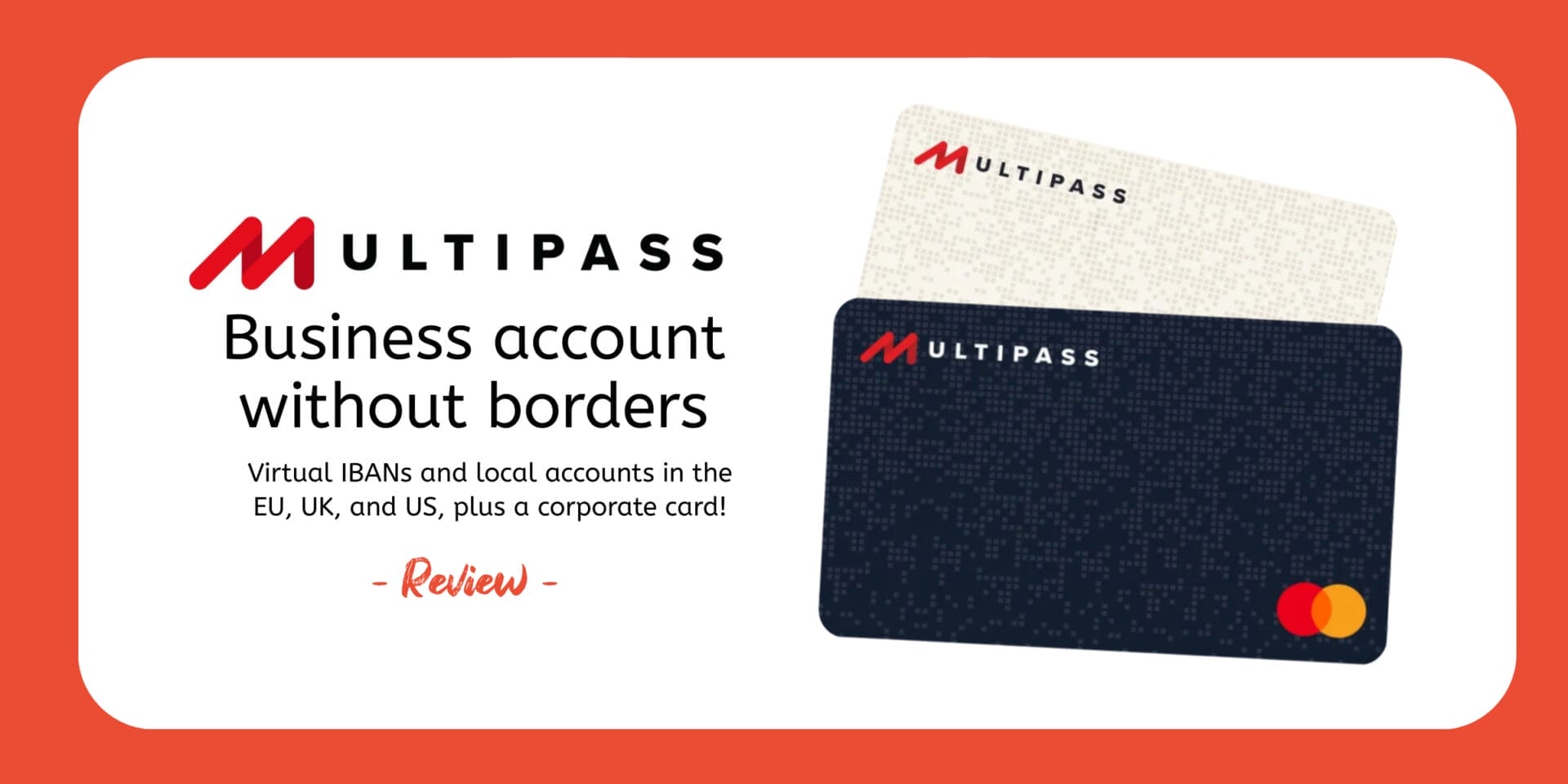
MultiPass provides multi-currency virtual IBANs with local UK, EU, and US account details. Send and receive payments in 70+ currencies across 200+ countries with wholesale FX rates. Manage up to 15 business cards (virtual or physical), fully online, with real-time controls. Exchange currencies instantly and keep multi-currency balances to avoid unnecessary conversions.
Accounting Integrations: MultiPass does not currently offer a direct accounting-software integration, but it allows businesses to add team members (e.g., accountants) individually, assigning them view-only or limited permissions so they can access transaction history and financial data. Additionally, users can export account statements and CSV files, enabling manual import into accounting software.
Multicurrency Support: Multicurrency is at the core of a Multipass account, allowing businesses to send, receive, and hold multiple currencies in the same account. Payments can be made via SWIFT or 20+ local payment methods. Exchange rates are fixed and transparent, with fees that can be waived depending on transaction volumes, making international payments and currency management straightforward.
Eligible business types: Limited Companies, LP and LLP
MultiPass Global Business Account Pricing
- Free: Online banking, relationship manager, extra IBANs
- Onboarding: From £500 (one-time account setup)
- Monthly Fee: From £100 (for account maintenance) + Card £10/month
- Minimum Balance: Must maintain 3× monthly fee, or pay £100/month
- UK Transfers: Free incoming, £1 outgoing
- SEPA Transfers: €2 incoming, from 0.10% outgoing
- SWIFT Transfers: £20–£60
- Extra Fees: £500 for missing documents; account closure from 3× monthly fee
Find out more at MultiPass




Airwallex Business Account
Airwallex Business Account provides companies with a single platform to manage international payments and finances. Businesses can open multi-currency accounts with local bank details across different countries without traditional banking paperwork. The platform allows companies to send and receive money globally at interbank exchange rates with transparent pricing. Organizations get corporate cards that operate in multiple currencies and integrate with existing accounting systems. It eliminates the need for multiple banking relationships and expensive traditional transfer services.

WorldFirst Business Account
WorldFirst is a cross-border payments platform built for businesses that trade internationally. Part of Ant Group and serving over 1.5 million businesses globally, it offers a multi-currency World Account with local banking details in 20+ currencies — letting you receive, hold, convert, and send money without the cost and friction of traditional banking. Send payments in 100+ currencies to 210+ countries, with 80% arriving the same day. No monthly fees, no minimum balance, no receiving fees.

International £4.00
Cross-currency £5k+ Free
New customers 0.3%
Wise Business Account
Wise offers business accounts that help companies manage money across different countries without the usual banking hassles. You get real exchange rates and transparent fees for everything you do. The account works like a regular business account but handles multiple currencies easily. You can send payments worldwide, receive money from customers, and give your team spending cards. Setting up takes minutes and there are no monthly charges to worry about.

Multipass Business Account
MultiPass is a digital banking solution designed for businesses that need to handle international payments and multi-currency transactions. The platform provides virtual IBANs for different regions including the UK, EU, and US. Companies can manage their finances across 70+ currencies from a single dashboard. MultiPass also offers corporate cards and batch payment features for streamlined business operations. The service aims to simplify cross-border banking for growing businesses.

If your business sends money abroad, receives payments in foreign currencies, or pays overseas suppliers, a multi-currency business account can significantly reduce your FX costs and administrative burden. This guide explains what multi-currency accounts are, who needs one, how to compare providers on the factors that actually matter, and what hidden costs to watch out for before you sign up.
All regulatory and protection information in this guide reflects the position as at April 2026. Always verify a provider’s current FCA status, FSCS eligibility, and safeguarding arrangements directly with the provider and at fscs.org.uk before depositing significant funds.
Is a Multi-Currency Account Right for Your Business?
Not every business needs one. Before comparing providers, use this checklist to see whether a multi-currency account is likely to save you money and reduce admin:
- You sell products or services to customers outside the UK and receive payment in foreign currencies
- You pay overseas suppliers, freelancers, or contractors regularly in currencies other than GBP
- You sell on international marketplaces such as Amazon, Etsy, or Shopify and receive payouts in USD, EUR, or other currencies
- You are regularly losing money on exchange rate markups when your bank automatically converts incoming foreign payments to GBP
- You want to hold foreign currency balances and convert when the rate suits you, rather than at the moment of receipt
- You have employees who travel or spend internationally and need cards without foreign transaction fees
Key Point: Not Always Necessary
If all your customers and suppliers are UK-based and you only deal in GBP, a standard UK business account will almost certainly serve you better. A multi-currency account adds value in proportion to your international payment activity — for purely domestic businesses, the additional complexity is rarely justified.
What Is a Business Multi-Currency Account?
A business multi-currency account lets you hold, send, and receive money in more than one currency — all from a single account. Instead of converting every foreign payment into pounds the moment it arrives (and paying conversion fees each time), you can keep balances in the currencies you use most and convert only when the rate suits you.
For UK businesses that deal with overseas customers, foreign suppliers, or international platforms — such as Amazon, Stripe, or Shopify — a multi-currency account can meaningfully reduce foreign exchange (FX) costs and administrative friction. The most capable accounts go further, giving you local bank details in multiple countries so that paying you feels domestic to your customers, whether they are in the US, the EU, or further afield.
These accounts are typically offered by specialist fintech providers rather than traditional high-street banks, and they vary significantly in pricing models, the number of currencies supported, and the quality of their business tools.
Who Needs a Multi-Currency Business Account?
For many businesses, the cost savings quickly justify the switch. A multi-currency account is worth considering if any of the following apply:
- International customers: You sell products or services to customers in other countries and receive payments in EUR, USD, or other currencies.
- Overseas suppliers: You pay foreign suppliers or contractors regularly and are currently losing money on exchange rate markups from your standard bank.
- Payment platforms: You use Stripe, PayPal, or Amazon Seller Central, which often allow payouts in foreign currencies.
- Business travel: You or your employees travel internationally and need a card that does not charge foreign transaction fees.
- E-commerce growth: You are expanding into European or US markets and need to handle multiple currencies efficiently.
- Strategic conversion: You want to hold currency balances and convert at a time of your choosing, rather than at the moment of receipt.
A Practical Guide to Reducing FX Costs
Understand Where Your FX Costs Come From
Many small business owners are surprised to discover how much they lose to foreign exchange fees each year. The costs are rarely labelled obviously — they are built into the exchange rate offered by a bank, or buried in a conversion fee that appears only at the point of payment. The gap between the mid-market rate (what you see on Google) and the rate your bank gives you is the margin the bank keeps. Even a 1.5% margin on £5,000 per month in foreign payments costs £900 per year.
The first step to reducing FX costs is mapping where your foreign currency flows happen: which currencies, how frequently, and in what volumes. This gives you the data to assess which account’s fee structure will be cheapest for your specific pattern of use.
Hold Currency — Don’t Always Convert Immediately
One of the most underused features of multi-currency accounts is the ability to hold balances in foreign currencies and convert them at a time of your choosing. If you receive USD payments regularly and also pay USD invoices to suppliers, you may be able to net these off entirely — receiving in USD and paying out in USD without ever converting to GBP. This eliminates FX costs on both sides of the transaction.
Even if your inflows and outflows do not match perfectly, having the flexibility to hold and convert strategically — rather than automatically at the point of receipt — gives you more control over your effective exchange rate.
Use Local Account Details to Avoid Wire Fees
When a customer or marketplace platform sends you money as an international wire, they may incur fees from their own bank, and you may face receiving fees from yours. Both sides lose money in the process. By providing customers with local account details in their currency — a US routing number, a European IBAN — the payment travels as a domestic transfer on their end, arriving in your multi-currency account without triggering international wire fees.
For businesses using platforms like Amazon, Etsy, or Stripe, this can also mean accessing currency payouts directly rather than relying on the platform’s built-in (often expensive) conversion.
Review Your Exchange Rates Regularly
Switching multi-currency accounts is not as disruptive as switching a main business account, and the FX market is competitive. It is worth reviewing your provider’s rates against the market every 12–18 months, and checking whether a competitor has introduced a more favourable structure for your payment volumes. Some providers offer preferential rates for higher-volume customers — if your international turnover has grown, it may be worth contacting your provider to discuss pricing.
How to Compare Business Multi-Currency Accounts
1. Identify the Currencies You Actually Use
Start with the currencies that matter to your business — not the longest list a provider advertises. Most businesses operate in a handful of currencies, and the key question is whether your most-used ones are supported with local bank details rather than just currency conversion. Local account details — a sort code and account number for GBP, an IBAN for EUR, a routing number for USD — allow your customers to pay you as a local transaction, avoiding international wire fees on their end.
2. Understand the True Cost of Foreign Exchange
FX fees are the most significant ongoing cost of a multi-currency account, and they are not always displayed transparently. There are three main ways providers charge for currency conversion:
- Percentage markup above the interbank rate — for example, 0.5%–2% above the mid-market rate you see on Google or XE.com. Lower is better.
- Fixed spread built into the rate — a margin embedded in the exchange rate itself, rather than quoted separately. This can obscure the real cost; always compare the rate offered against the current mid-market rate.
- Flat fee per conversion — a fixed amount regardless of transaction size, which can be cost-effective for large transfers but expensive for small ones.
💡 FX Cost Benchmark
A 0.5% FX fee on £100,000 of annual foreign currency payments costs £500. At 2%, the same volume costs £2,000. Over several years, this difference is material — making the FX rate one of the most important factors when comparing providers.
3. Check Whether You Get Local Bank Details
There is an important distinction between a provider that lets you hold and convert currencies versus one that gives you actual local bank details in those currencies. Local details mean your US customers can pay via ACH transfer, your EU clients can send a standard SEPA payment, and marketplaces like Amazon can pay out directly in local currency. Without local bank details, foreign payments route as international transfers — which can trigger fees at both ends and slower settlement times.
4. Evaluate Monthly Fees and Transaction Costs
Monthly fees range from £0 to £100+ depending on the provider and plan tier. A low or zero monthly fee is not automatically better — always look at the transaction cost structure alongside it. Providers with no monthly fee may charge per transfer, per currency conversion, or take a larger FX spread. A subscription model with a flat monthly fee often becomes more economical for businesses making frequent payments.
Key costs to check in every comparison: monthly account fee, fee per outgoing bank transfer (domestic and international), FX conversion fee (percentage above mid-market rate), ATM withdrawal fees, card transaction fees in foreign currencies, and SWIFT or international wire fees for currencies outside the local payment network.
5. Consider Accounting and MTD Integration
As HMRC’s Making Tax Digital requirements extend to more businesses — with MTD for Income Tax beginning to apply to sole traders earning over £50,000 from April 2026 — the ability to connect your account directly to accounting software is increasingly important. Look for providers that offer direct bank feeds into Xero, QuickBooks, FreeAgent, or Sage. For multi-currency accounts specifically, check whether the integration handles foreign currency transactions correctly, including recording the GBP equivalent at the time of the transaction and tracking unrealised gains or losses on held currency balances.
6. Verify the Regulatory and Protection Status
Business multi-currency accounts in the UK are typically offered by one of two types of entity. Understanding the difference matters, especially if you hold significant balances:
- Authorised banks (FCA-regulated): Deposits are protected by the FSCS up to £85,000 per eligible depositor. If the bank fails, FSCS compensation is typically paid within seven working days.
- E-Money Institutions (EMIs): Regulated by the FCA but not covered by the FSCS. Instead, they are required to safeguard your funds — holding them in a segregated account at a regulated bank, separate from the EMI’s own money. Your funds are protected from the provider’s creditors, but in the event of failure, the recovery process may take longer than an FSCS payout. Most multi-currency fintechs operate as EMIs.
Check Regulatory Status Before Opening an Account
Neither model is inherently unsafe, but the distinction matters — particularly for businesses holding large balances. Always verify a provider’s FCA registration at register.fca.org.uk and confirm the current FSCS limit and your eligibility at fscs.org.uk before committing.
7. Review Corporate Card Functionality
Many multi-currency accounts include physical and virtual cards for business spending. Key things to assess: whether you can issue cards to employees with individual spending limits, whether card transactions are charged in the local currency without a foreign transaction fee, whether receipt capture and expense categorisation is built into the app, and what the ATM withdrawal fees are abroad. For businesses with employees who travel or spend internationally, these card features can be as important as the account’s core banking functionality.
Hidden Costs to Watch Out For
The headline FX rate is only part of the story. Several costs are commonly overlooked when comparing multi-currency accounts — and they can significantly affect what you actually pay over a year.
Forced Conversion on Receipt
Some providers — including many traditional banks — automatically convert incoming foreign currency payments into GBP the moment they arrive, even if you would prefer to hold them in the original currency. This removes your ability to time conversions strategically and means you pay the FX margin on every single receipt. Always check whether a provider lets you hold balances in the original currency or converts automatically.
Exchange Rate Spread vs. Mid-Market Rate
Most providers quote their FX fee as a percentage, but the real cost is the gap between the rate they offer you and the mid-market rate — the rate you see on Google or XE.com. Some providers embed their margin in the rate itself rather than quoting it as a separate fee, making comparisons difficult. Before committing, compare the rate offered by a provider against the current mid-market rate for a realistic picture of what you will actually pay.
SWIFT Intermediary Fees
When a payment travels via the SWIFT network rather than a local payment rail, it can pass through one or more correspondent banks on its way to you. Each of these banks may deduct a fee from the transfer, meaning the amount that arrives can be less than what was sent. These deductions are unpredictable and often only visible after the payment has settled. Using local payment rails — such as SEPA for EUR or ACH for USD — avoids this problem entirely, which is why the availability of local account details matters so much.
Inbound Payment Fees
Separate from SWIFT intermediary fees, some providers charge their own fee for receiving an international payment. This may appear as a flat fee per receipt or as a percentage of the amount received. Check the provider’s fee schedule specifically for incoming payment charges, as these are sometimes buried in the small print.
Plan Limits and Upgrade Thresholds
Many multi-currency providers offer a free or low-cost entry tier, but with caps on the number of transfers, the volume of fee-free conversions, or the number of team members who can hold cards. Once you exceed these limits, the cost can increase significantly. When comparing plans, model your expected monthly usage — not just whether the base plan is affordable, but what your likely costs would be if your business grows by 50% or doubles its international payment volume.
Inactivity and Maintenance Fees
Some providers charge fees if your account falls below a minimum balance or if you do not make a minimum number of transactions within a given period. These are uncommon among the main UK-focused fintech providers but are more frequently seen in accounts targeting larger businesses or those with premium plan structures. Always check the full terms and conditions for any maintenance or inactivity clauses.
FSCS Protection and Safeguarding: What You Need to Know
The majority of business multi-currency accounts on the UK market are provided by Electronic Money Institutions (EMIs) rather than fully authorised banks. This means they are not covered by the Financial Services Compensation Scheme (FSCS).
Instead, EMIs are required by FCA rules to safeguard customer funds. In practice, this means your money is held in a ring-fenced account at a regulated bank, kept entirely separate from the EMI’s own operating funds. If the EMI fails, your money should be protected from their creditors — but recovering it may take longer than the seven-day FSCS guarantee.
For most day-to-day business use, safeguarding provides reasonable protection. However, businesses that hold large balances for extended periods — or who cannot afford any delay in accessing funds — should factor this into their decision. Consider spreading balances across providers, or maintaining a separate account at an FSCS-protected bank for funds you do not need to actively manage.
Disclaimer
This section is for informational purposes only and does not constitute financial advice. FSCS protection levels and eligibility criteria can change. Always verify current protection details directly with the provider and at fscs.org.uk.
Multi-Currency Account FAQs: People Also Ask
Do I need a separate account for each currency?
No — this depends on the provider’s structure. Some providers manage everything under a single unified account where multiple currency balances sit together in one dashboard. Others use a model where each currency has its own named account or wallet, each with dedicated local bank details, all linked under one login. There is also an important distinction between receiving true local account details for a currency versus only receiving SWIFT details, which routes payments as international transfers. Always confirm which currencies come with local account details and which use SWIFT only before opening an account.
Can I use a multi-currency account as my main business account?
This depends on the provider. Some multi-currency accounts — particularly those offered by fintech platforms — are best used alongside a primary UK business account rather than as a replacement for one. They may not support all domestic payment types such as Direct Debits or BACS payroll, or may lack features like cash deposits. Others are comprehensive enough to serve as a primary business account. Check the specific features of each provider before making this decision.
What is the difference between a multi-currency account and a foreign currency account?
A foreign currency account typically holds one specific non-sterling currency — for example, a EUR account at a high-street bank. A multi-currency account lets you hold, send, and receive money in many currencies from a single platform, often with better exchange rates, lower fees, and more flexible management tools. Multi-currency accounts are generally better suited to businesses with diverse international payment needs.
Are multi-currency accounts regulated in the UK?
Yes. All providers operating in the UK must be authorised or registered with the Financial Conduct Authority (FCA). You can verify any provider’s regulatory status on the FCA Register at register.fca.org.uk. Most multi-currency fintech providers operate as Electronic Money Institutions (EMIs) under FCA authorisation — meaning they are regulated and required to safeguard customer funds, but they are not covered by the FSCS in the same way as fully authorised banks.
How long does it take to open a multi-currency business account?
Most fintech providers can open a business account within minutes to a few days, depending on the level of identity verification required. Sole traders typically complete verification faster than limited companies, which may require documentation such as a Certificate of Incorporation and details of directors and beneficial owners. Some providers begin account access immediately after ID checks, issuing a virtual card before a physical card arrives.
Can I accept card payments through a multi-currency account?
This varies by provider. Some multi-currency business accounts include integrated payment processing, allowing you to accept card payments from customers directly. Others focus purely on banking — holding, sending, and receiving money — and do not include merchant payment processing. If you need to accept card payments, check whether the provider offers this as part of their account or as an add-on, and compare the rates carefully with dedicated payment processors.
What happens to my money if the provider goes out of business?
If the provider is an FCA-authorised bank, your eligible deposits are protected by the FSCS up to £85,000 per eligible depositor. If the provider is an Electronic Money Institution operating under FCA safeguarding rules, your funds are held in a ring-fenced account at a regulated bank and protected from the provider’s creditors — though recovery may take longer than an FSCS payout. Always verify a provider’s regulatory status and protection arrangements before depositing significant funds. Regulatory limits and protections are subject to change — always verify current FSCS limits and EMI safeguarding details at fscs.org.uk.
Is my money protected when held in a foreign currency balance?
This depends on the provider’s regulatory status. For EMI providers using safeguarding, funds held in foreign currency balances are typically included in the safeguarding arrangement — but confirm this directly with the provider, as the specific terms vary. For FSCS-protected accounts, standard limits apply to the sterling equivalent of your total deposits with that institution.
Can sole traders open a multi-currency business account?
Yes. Most multi-currency business accounts are available to sole traders, freelancers, and limited companies. Eligibility criteria vary — some providers require a UK-registered business address, while others accept non-UK residents. Always check the provider’s eligibility requirements before applying, particularly if you operate as a sole trader without a separate registered business address.
What is an IBAN, and do I need one for EUR payments?
An IBAN (International Bank Account Number) is the standard identifier used for bank transfers across Europe and many other regions. For businesses receiving EUR payments, having a dedicated EUR IBAN means your European customers can pay you via a standard domestic SEPA transfer rather than an international wire — which is faster, cheaper, and more familiar to them. Most multi-currency providers assign you a virtual IBAN for supported currencies as part of the account setup. Whether you receive a true local IBAN or a SWIFT-based identifier depends on the provider and the specific currency — confirm this before opening an account.
Disclaimer: MoneyZoe is an independent comparison and information service. We may earn a commission if you apply for a product through links on this page. This does not affect our editorial independence. Product features and pricing can change — always check directly with the provider before applying. Nothing on this page constitutes financial advice. If you are unsure which product is right for your business, seek independent financial advice from a qualified professional. Last reviewed: April 2026.
Articles and Guides for Business Banking





✓ Access to genuine interbank FX rates with zero markup, plus zero foreign transaction fees on corporate cards
✓ Monthly fee of £19, waived when maintaining a £10,000 minimum balance